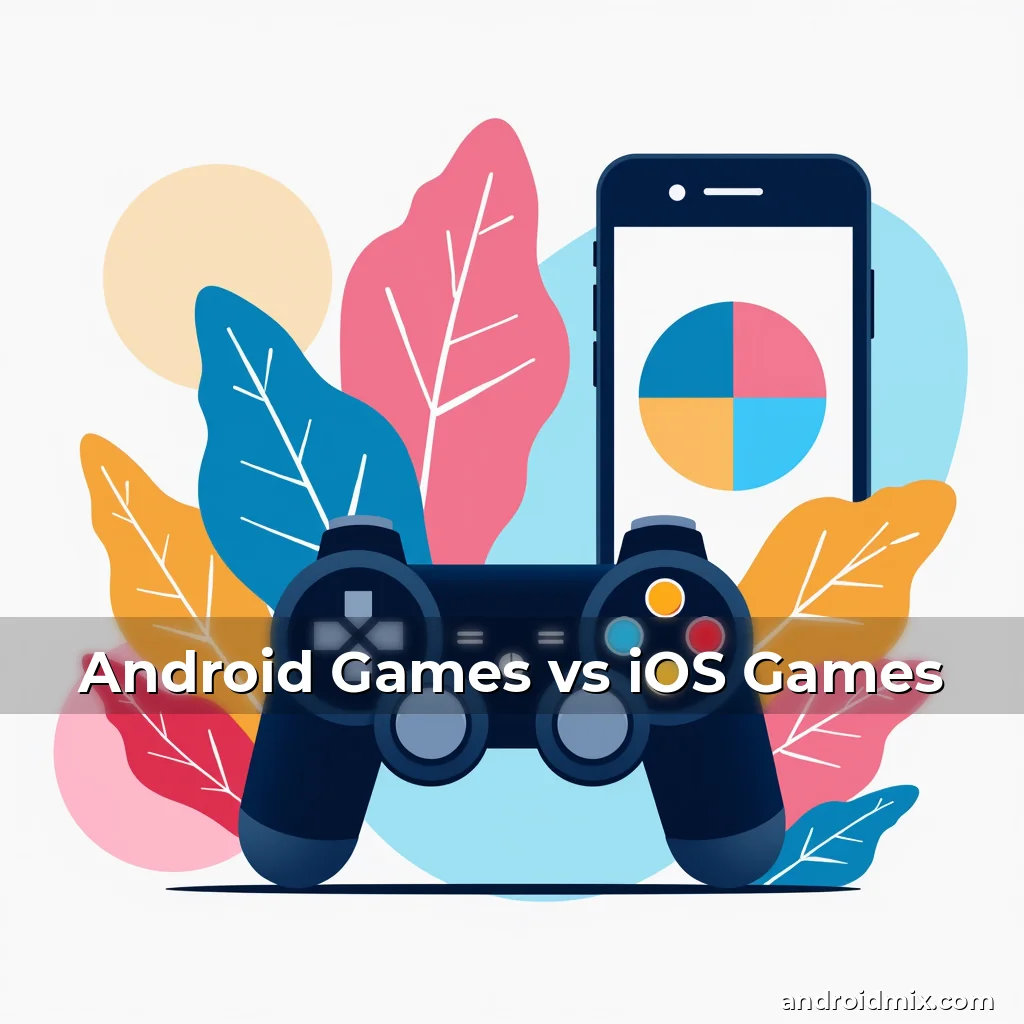
Android Games vs iOS Games: A Deep Dive Into Platform Dynamics and Player Preferences
The world of mobile gaming has exploded into a multibillion-dollar industry, dominated primarily by Android and iOS devices. While both platforms offer vast libraries of games, their ecosystems, user bases, and technical landscapes diverge significantly. This article explores these differences in depth, helping players and developers navigate the nuances of each system.
From hardware specifications to app stores, revenue models, and player demographics, Android and iOS cater to distinct audiences. Understanding these contrasts is essential for anyone seeking to maximize their experience—whether you’re a casual gamer, a competitive enthusiast, or a developer aiming to reach the right audience.
Market Share and User Demographics
One of the most striking differences between Android and iOS lies in their global market penetration. As of 2023, Android holds over 76% of the smartphone market worldwide, while iOS commands around 23%. This disparity translates directly into the number of potential gamers across each platform.
However, market share doesn’t always correlate with spending power. iOS users tend to spend significantly more on in-app purchases than Android users. According to Sensor Tower data, iOS generates nearly twice as much revenue as Android in the gaming sector annually. This financial divide shapes the types of games developed for each ecosystem.
- Device diversity: Android’s open-source nature allows manufacturers to produce smartphones at various price points, making it accessible to budget-conscious consumers.
- Lifestyle factors: iOS users often skew toward higher-income brackets, leading to different preferences in game genres and monetization methods.
Hardware Capabilities and Game Optimization
Game performance hinges heavily on hardware specs, and Android and iOS devices vary widely in this regard. High-end Android flagships now rival iPhones in terms of processors, GPUs, and RAM, but mid-range and entry-level Android phones still lag behind Apple’s consistent hardware standards.
iOS devices benefit from tight integration between hardware and software, enabling smoother performance in graphically intensive games. Apple’s uniformity also simplifies optimization for developers, reducing compatibility issues across devices.
Screen Sizes and Display Technologies
Android offers unparalleled variety in screen size and resolution. Users can choose from compact phones ideal for single-handed gameplay to massive tablets perfect for immersive experiences. In contrast, iOS maintains a narrower range, focusing on portrait-oriented designs optimized for thumb-based navigation.
This flexibility comes with trade-offs. Some Android games struggle to scale properly across diverse resolutions, while iOS games leverage consistent screen ratios to deliver polished visuals. Developers often prioritize iOS for high-fidelity graphics due to its predictable environment.
App Store Ecosystems and Developer Tools
Google Play Store and the App Store represent fundamentally different approaches to curation and distribution. Google’s marketplace embraces openness, allowing millions of apps, including many free-to-play games with aggressive ad placements. Apple enforces stricter guidelines, resulting in fewer apps but generally higher quality and security.
For developers, the approval process differs dramatically. Google Play reviews apps relatively quickly, whereas App Store submissions require meticulous attention to design, functionality, and compliance rules. These distinctions influence everything from marketing strategies to monetization tactics.
Monetization Models and Player Behavior
Gaming economies on Android and iOS reflect their respective user bases. Free-to-play games dominate both platforms, but Android sees heavier reliance on ads and microtransactions. Many Android games feature intrusive full-screen advertisements or push notifications designed to drive engagement.
iOS players, however, show stronger tolerance for premium pricing and in-game purchases. Apps like *Genshin Impact* and *Call of Duty Mobile* thrive on iOS due to its willingness to pay, though they’ve also achieved success on Android through targeted promotions and regional discounts.
- Battle Pass systems: Popularized by iOS, these have since been adopted across Android, though with varying degrees of success depending on regional economics.
- Cosmetic items: Both platforms see demand, but iOS users are more likely to invest in virtual goods for social status rather than functional upgrades.
Exclusive Titles and Cross-Platform Support
Despite overlapping libraries, some games remain exclusive to either platform. Nintendo titles such as *Super Mario Run* and *Animal Crossing: Pocket Camp* were initially limited to iOS before expanding to Android. Conversely, Android-exclusive gems like *Brawl Stars* and *PUBG Mobile* rarely appear on iOS due to licensing agreements or development priorities.
Multiplayer games increasingly adopt cross-platform play to expand their audiences. However, technical limitations sometimes prevent seamless synchronization between Android and iOS devices. For instance, latency differences caused by varied network infrastructure can impact real-time gameplay fairness.
Cloud Gaming and Future Trends
Both platforms are adapting to cloud gaming services like Xbox Cloud Gaming and GeForce Now. However, Android benefits from native support via Google Stadia, while iOS relies on third-party integrations. The rise of 5G networks promises to bridge this gap, enabling smoother streaming experiences regardless of device type.
Augmented reality (AR) and virtual reality (VR) adoption also shows promise. Pokémon GO’s success demonstrated Android’s potential for location-based AR, while iOS leads in ARKit applications tailored for high-end hardware. As VR headsets become more affordable, we may see hybrid Android-iOS solutions emerge.
User Interface Design and Control Schemes
Tactile feedback plays a crucial role in mobile gaming. iOS leverages haptic vibrations in newer iPhones to simulate button presses during action sequences, enhancing immersion. Android phones vary in vibration intensity, with flagship models offering comparable precision.
Control schemes further differentiate the platforms. iOS games predominantly use on-screen buttons optimized for thumb placement, while Android supports customizable layouts, external controllers, and even stylus input for puzzle games. This adaptability makes Android appealing to niche audiences preferring alternative control methods.
Performance Challenges and Optimization Strategies
Fragmentation remains a key challenge for Android developers. With thousands of device variants running different OS versions, ensuring stable frame rates becomes complex. Techniques like adaptive rendering and dynamic resolution scaling help mitigate these issues.
In contrast, iOS developers face fewer variables but must still contend with annual hardware updates. Backward compatibility ensures older iPhone models retain access to new games, albeit with slightly reduced graphical fidelity. This balance helps maintain a cohesive user experience across generations.
Community Engagement and Social Features
Social connectivity defines modern gaming experiences. iOS excels in integrating with Apple’s broader ecosystem, allowing seamless sharing of achievements to iCloud and social media. Android’s fragmented approach means similar features depend on manufacturer-specific implementations.
Leaderboards, cooperative modes, and live events foster community building on both platforms. However, Android’s larger install base enables wider participation in global competitions, while iOS tournaments often attract top-tier competitors focused on competitive integrity.
Future Outlook and Emerging Technologies
As AI-driven procedural generation gains traction, we may see more personalized gaming experiences tailored to individual playstyles. Android’s open architecture will likely accelerate experimentation with AI-powered mods and customizations, while iOS focuses on refining existing technologies for polish and reliability.
Environmental concerns are also shaping future developments. Both platforms are exploring energy-efficient game engines and sustainability initiatives, reflecting growing consumer awareness. Android’s flexible charging options give it an edge in supporting long gaming sessions without compromising battery life.
Conclusion
Whether you prefer Android’s versatility or iOS’s refined experience, understanding the strengths and weaknesses of each platform enhances your gaming journey. From hardware choices to monetization trends, the landscape continues evolving rapidly.
To make informed decisions, consider your priorities: If affordability and customization matter most, Android offers unmatched freedom. But if consistency, security, and premium content align better with your goals, iOS provides a streamlined yet powerful gaming environment. Stay adaptable, stay curious, and explore what works best for you.